


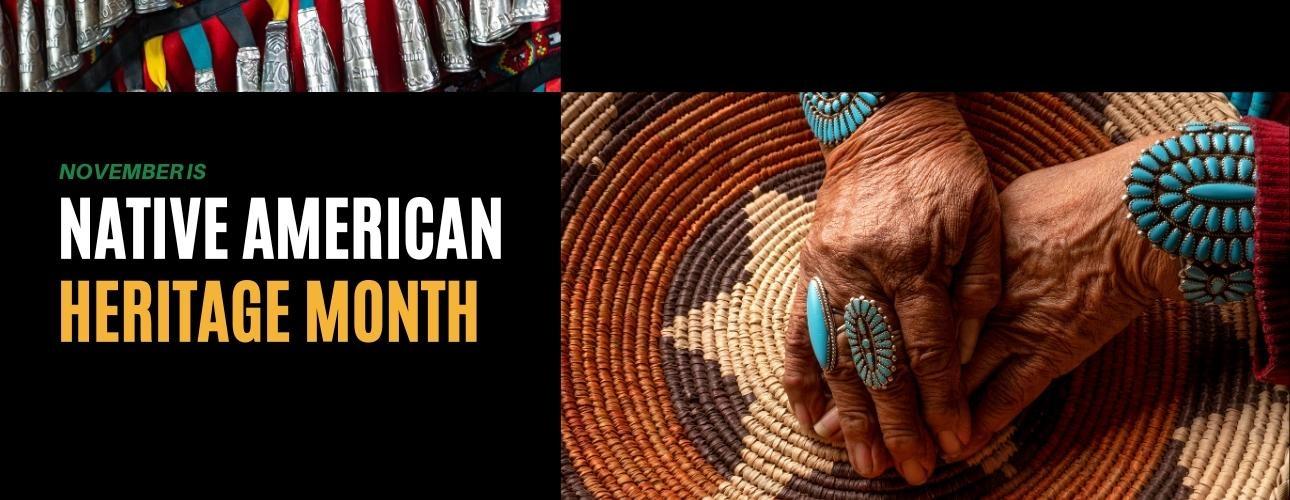
November is Native American & Alaska Native Heritage Month—an opportunity to celebrate and learn about the rich and diverse cultures, languages, and histories of Indigenous peoples across the United States. It is a time to honor Indigenous culture makers, visionaries, activists, and leaders—past and present—while amplifying the contemporary voices of Native Americans and their communities.
Originally conceived of in 1915 as a single day recognition of Native peoples’ contributions to the development of the United states, Dr. Arthur C. Parker—a Seneca Indian and the director of the Museum of Arts and Science in Rochester, NY—convinced the Boy Scouts of America to host a First Americans Day. This evolved over the course of the 20th century, taking place on different dates in different states and under a variety of names, until 1990 when President George H. W. Bush approved a joint resolution designating November as National Native American Heritage Month.
This annual occurrence is also a time to acknowledge the losses suffered through disease, warfare, and forced assimilation stemming from the colonization of North America by Europeans. In that same spirit, we acknowledge and honor the Haudenosaunee peoples, specifically the Kanien’keha:ka, or Mohawk tribe, on who’s ancestral land we in the North Country live, and the local communities of Ganienkeh, Akwesasne, Kahnawake, and Kanesatake in both the US and neighboring areas of Canada.
Use the classroom-ready resources, books, and activities below to learn about Native American and Alaska Native histories and cultures, past and present, this November and beyond.

